
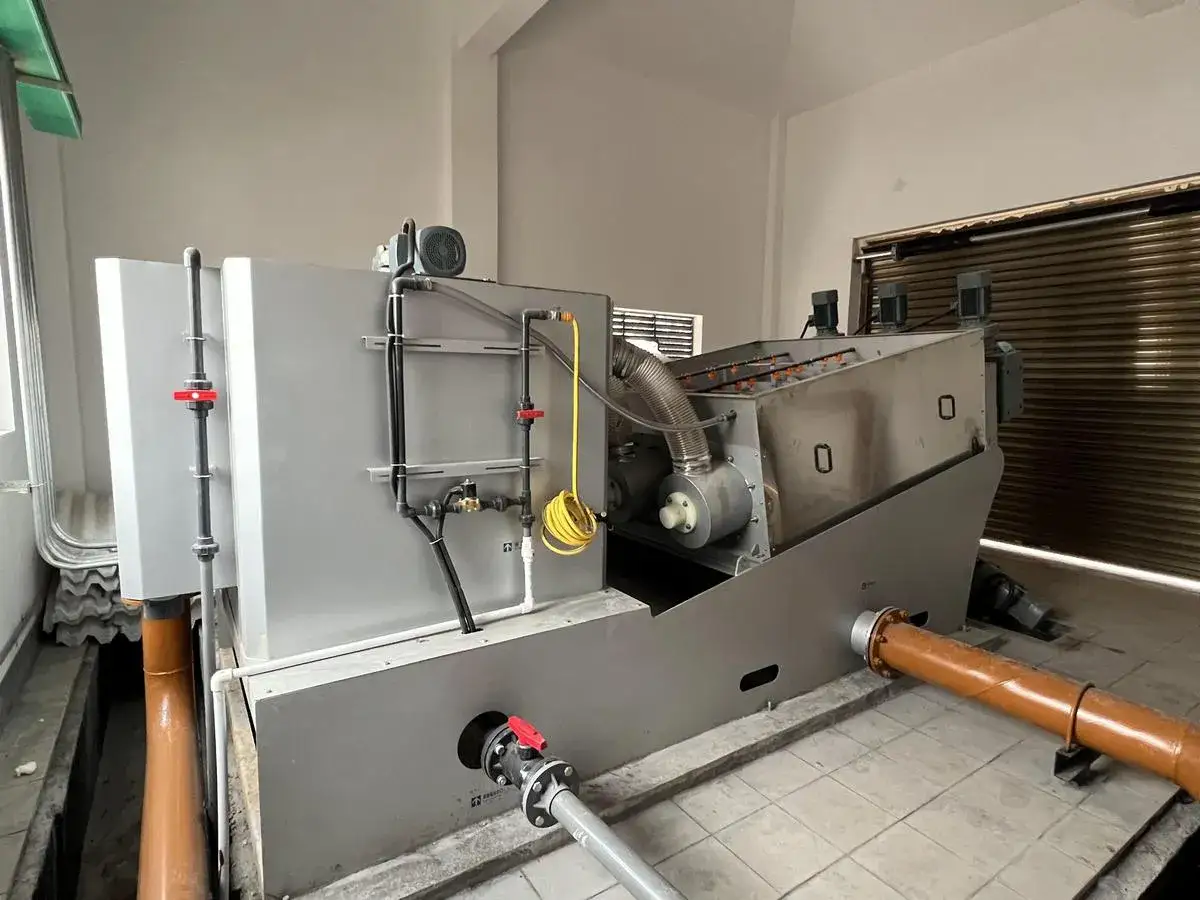
Multi Disc Screw Press
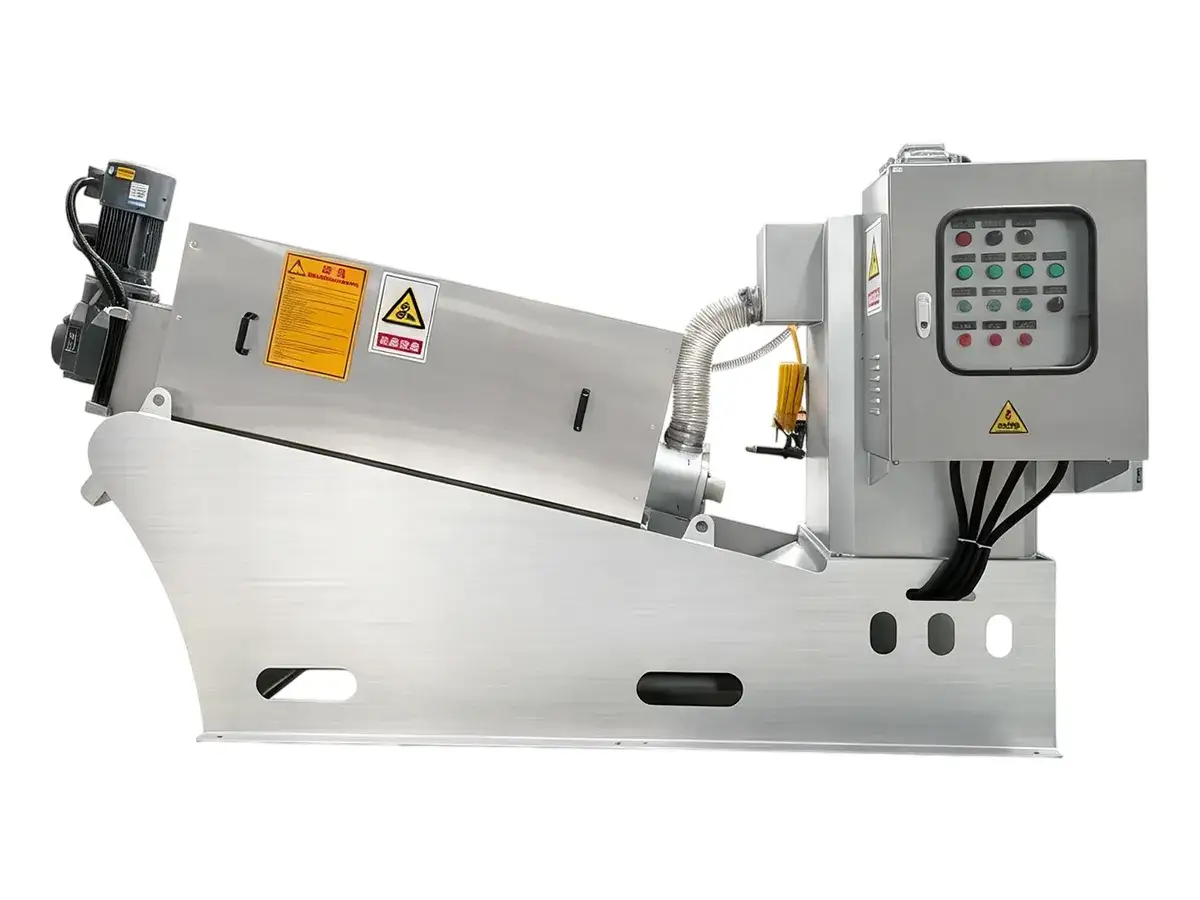
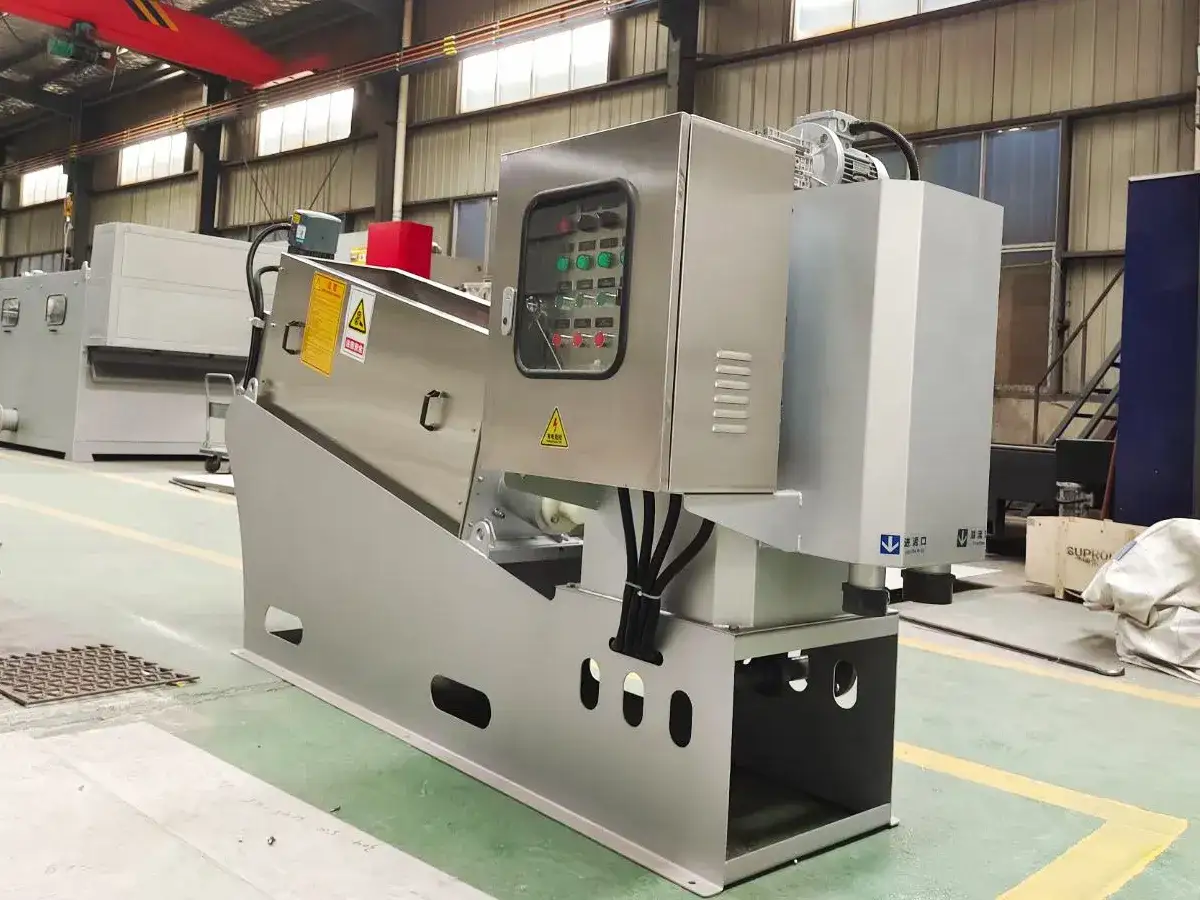
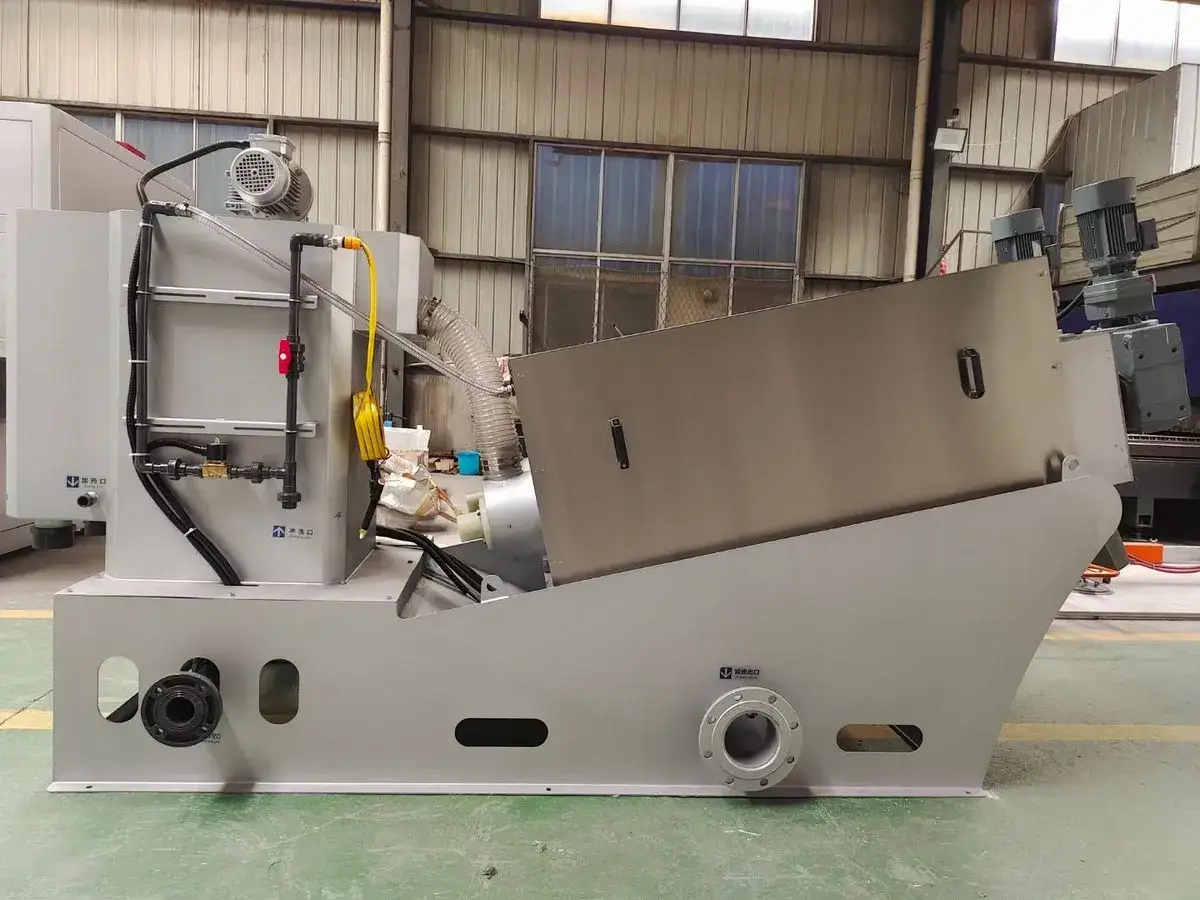
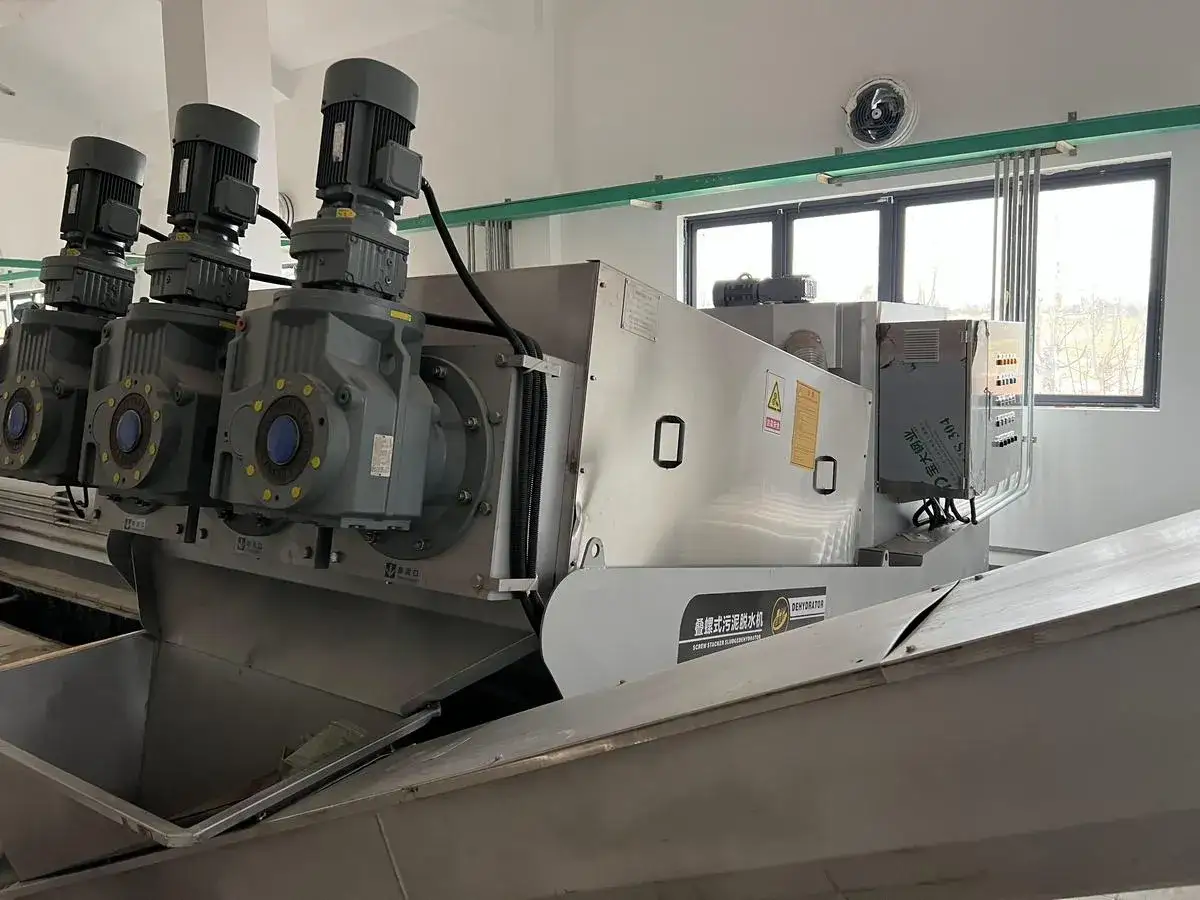
The DL-type multi-disc screw press is a form of sludge dewatering equipment that thickens and dewaters sludge in municipal wastewater treatment as well as in food, farming, dyeing and printing operations. The multi-disc screw press uses screw compression and filtration through fixed and moving rings to remove water from the sludge and forms a sludge cake for subsequent handling and disposal. The multi-disc screw press operates together with dosing, sludge feed, and automatic control systems.
The multi-disc screw press consists of a screw shaft, fixed rings, moving rings, a back pressure plate, and a drive system. In the thickening zone, part of the free water is first removed from the sludge. As the screw pitch decreases and the gaps between the rings narrow, internal pressure rises. Screw propulsion and back pressure then remove more water, and the sludge cake is discharged from the outlet.
| Model | Reference Dry Solids Capacity (kg DS/h) | Nominal Dry Solids Capacity (kg DS/h) | Maximum Dry Solids Capacity (kg DS/h) | Overall Dimensions (mm) | Power (kW) | Weight (kg) | |||||
| L | W | H | Flocculation/Mixing Tank | Screw Press Main Unit | Total Power | Empty Weight | Operating Weight | ||||
| |
≈1 | ≈2 | ≈5 | 1,090 | 728 | 1,100 | 0.1 | 0.1 | 0.2 | 150 | 170 |
| |
≈3 | ≈5 | ≈12 | 1,853 | 752 | 1,180 | 0.1 | 0.1 | 0.2 | 240 | 330 |
| |
≈6 | ≈10 | ≈25 | 1,996 | 752 | 1,180 | 0.1 | 0.1 | 0.2 | 250 | 345 |
| |
≈12 | ≈20 | ≈50 | 2,079 | 908 | 1,180 | 0.1 | 0.2 | 0.3 | 340 | 485 |
| |
≈12 | ≈20 | ≈50 | 2,522 | 865 | 1,230 | 0.1 | 0.2 | 0.3 | 300 | 450 |
| |
≈24 | ≈40 | ≈100 | 2,522 | 985 | 1,410 | 0.4 | 0.4 | 0.8 | 600 | 810 |
| |
≈30 | ≈50 | ≈125 | 3,265 | 980 | 1,551 | 0.4 | 0.4 | 0.8 | 855 | 1,245 |
| |
≈60 | ≈100 | ≈250 | 3,465 | 1,273 | 1,551 | 0.4 | 0.8 | 1.2 | 1,310 | 1,990 |
| |
≈90 | ≈150 | ≈375 | 3,615 | 1,590 | 1,551 | 0.75 | 1.2 | 1.95 | 1,795 | 2,765 |
| |
≈60 | ≈100 | ≈250 | 3,964 | 1,188 | 2,299 | 0.4 | 1.5 | 1.9 | 1,570 | 2,200 |
| |
≈120 | ≈200 | ≈500 | 4,115 | 1,550 | 2,299 | 0.75 | 3 | 3.75 | 2,660 | 3,610 |
| |
≈180 | ≈300 | ≈750 | 4,380 | 2,100 | 2,299 | 1.5 | 4.5 | 6 | 3,860 | 5,360 |
| |
≈240 | ≈400 | ≈1,000 | 4,645 | 3,120 | 2,299 | 2.2 | 6 | 8.2 | 5,600 | 7,560 |
| |
≈100 | ≈170 | ≈425 | 4,574 | 1,313 | 2,470 | 0.75 | 1.5 | 2.25 | 1,895 | 2,800 |
| |
≈200 | ≈340 | ≈850 | 4,839 | 1,658 | 2,470 | 1.5 | 3 | 4.5 | 3,310 | 4,960 |
| |
≈300 | ≈510 | ≈1,275 | 4,939 | 2,280 | 2,470 | 2.2 | 4.5 | 6.7 | 4,380 | 6,800 |
| |
≈400 | ≈680 | ≈1,700 | 5,254 | 3,300 | 2,470 | 3 | 6 | 9 | 6,190 | 9,210 |
| Sludge throughput = nominal dry solids capacity ÷ feed sludge solids concentration (DS = dry solids) | |||||||||||
- Filtration structure of fixed and moving rings, with the moving rings continuously clearing the filter gaps during operation to reduce clogging
- Back pressure and operating parameters adjustable to sludge properties and dewatering requirements
- Low-speed screw shaft with fewer high-speed rotating parts
- Optional PLC control system for coordinated operation with sludge feed pumps and chemical dosing systems