
Biological Odor Control Biofilter
The FRP biological odor control biofilter is a biological deodorization system that treats odorous gases from wastewater treatment plants, sewage pumping stations, waste and sludge treatment, pharmaceutical, chemical, food processing, and farming sites. This biological odor control system removes hydrogen sulfide, ammonia, and certain biodegradable volatile organic compounds (VOCs) using microbial degradation.
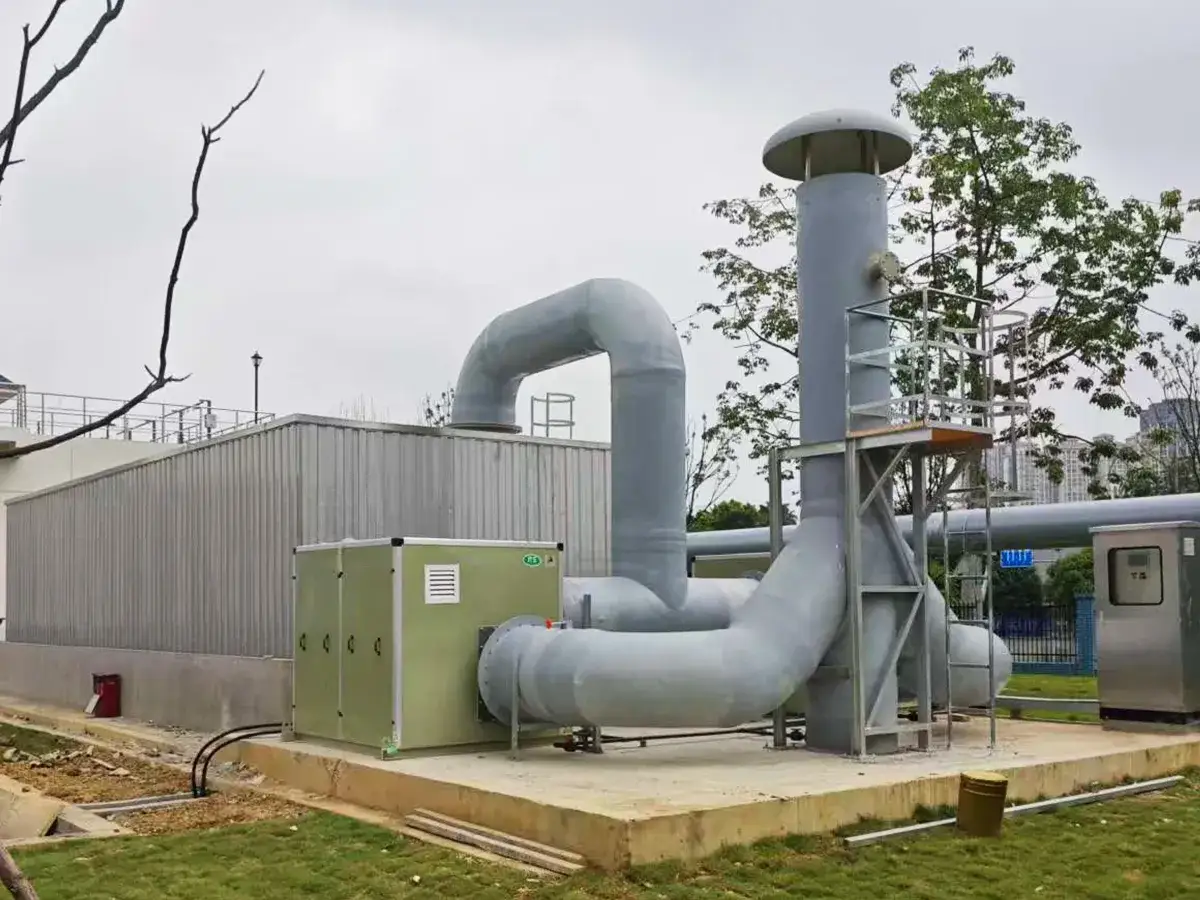
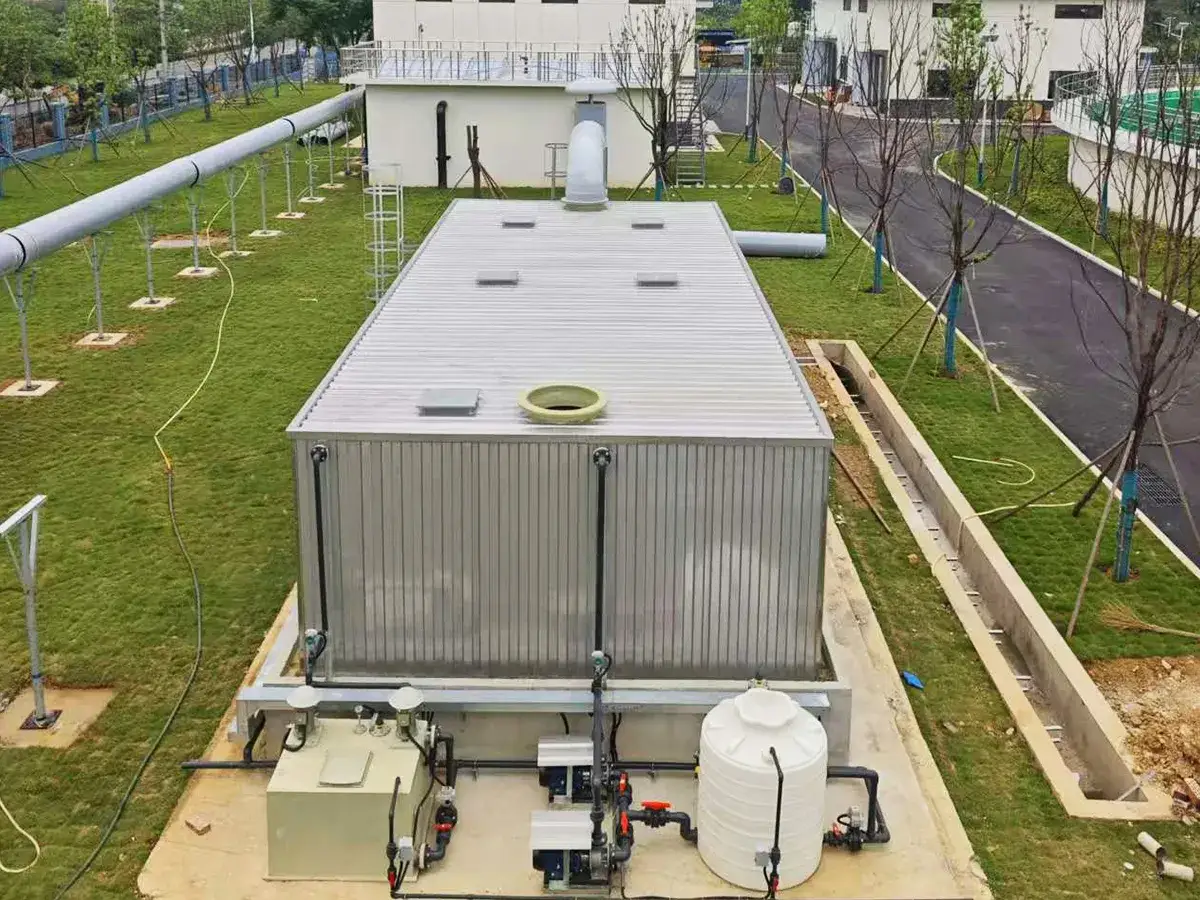
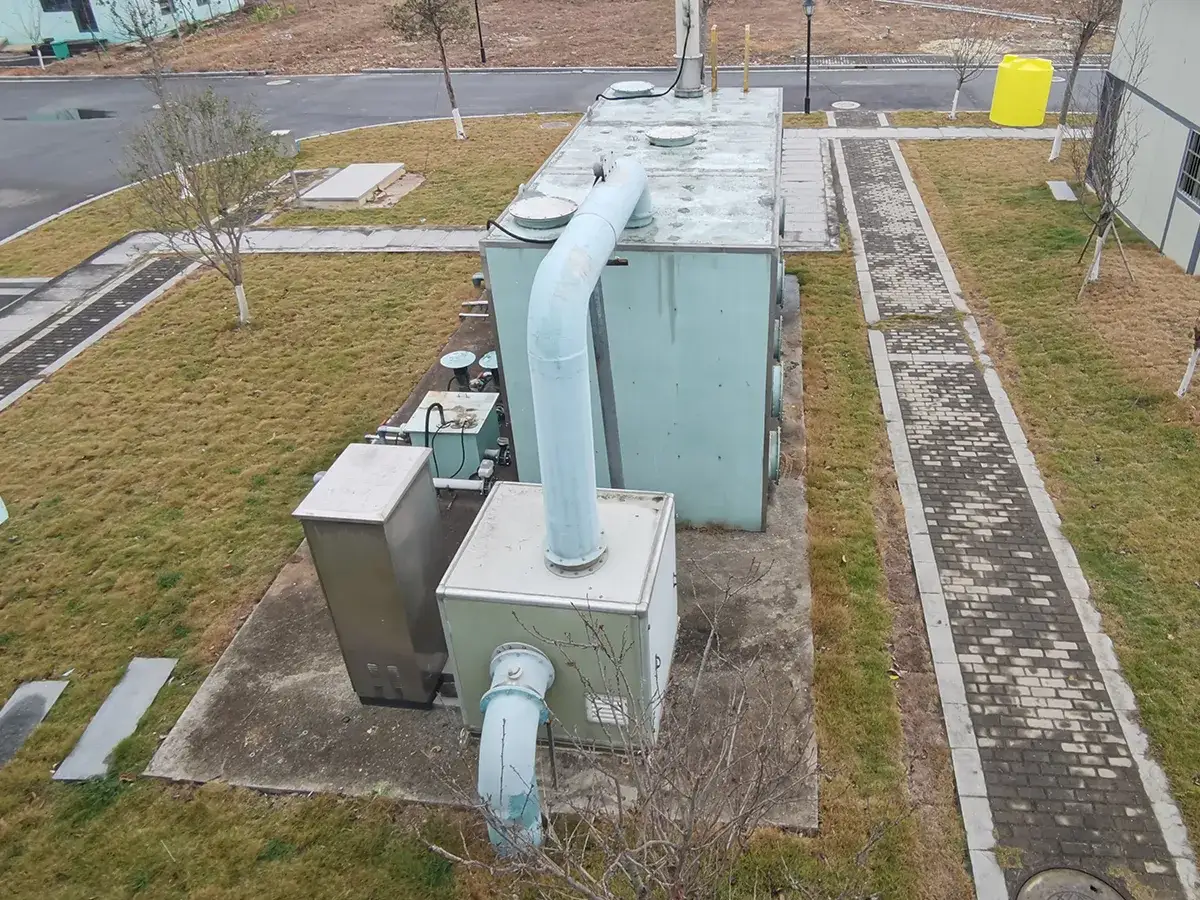
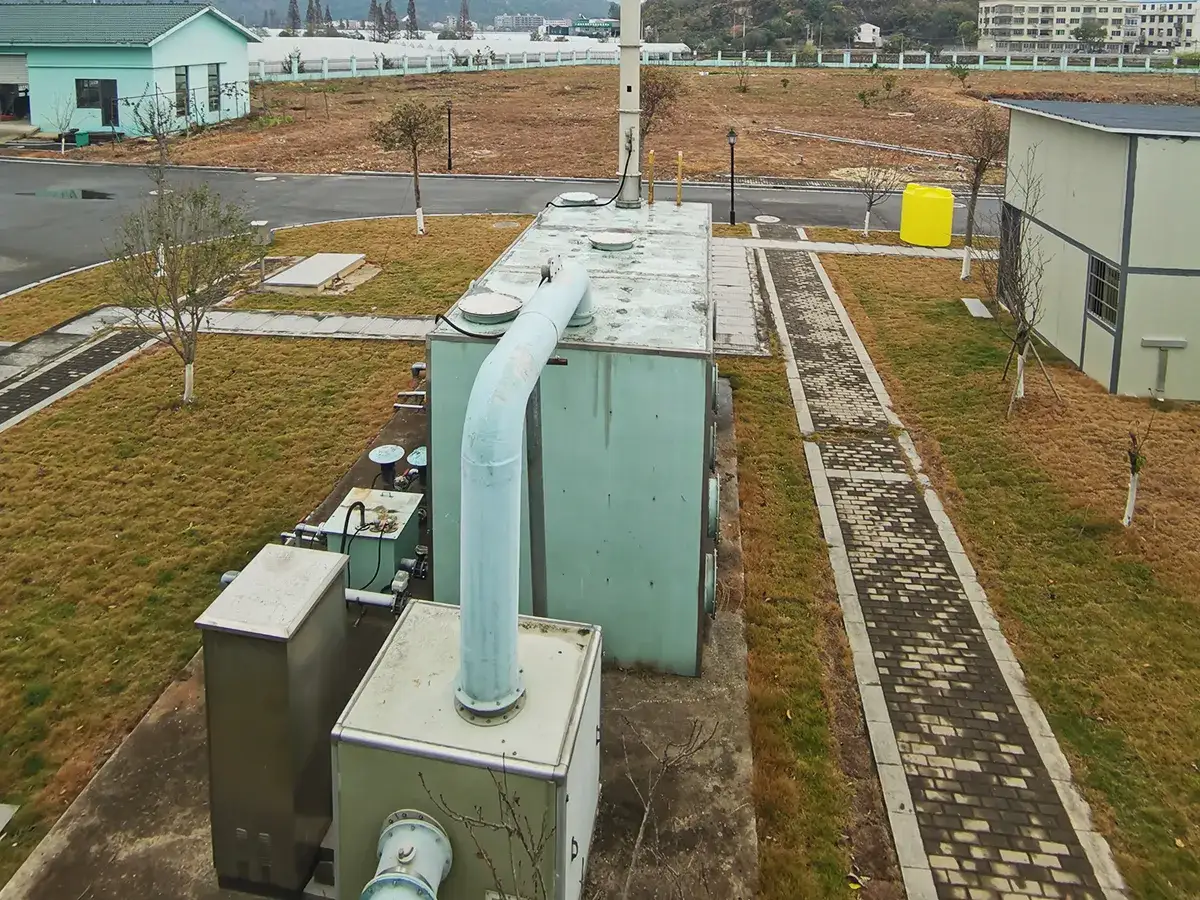
The FRP biological odor control biofilter consists of an FRP housing, biological packing layer, spray circulation system, air distribution system, as well as a control system. Odorous gas contacts the microbial biofilm on the packing surface. Pollutants then transfer from the gas phase into the biofilm and water film, where microorganisms then biodegrade them using the pollutants as a carbon or energy source, converting them into carbon dioxide, water, sulfate, and nitrate. The spray system keeps the packing moist and maintains a suitable environment for microbial growth. This biological air treatment process provides an air pollution control system for biodegradable odor compounds without relying solely on chemical absorption.
| Pollutant | Class II Limit (mg/m³) | Removal Efficiency (%) |
| Hydrogen Sulfide | 0.06 | ≥99 |
| Ammonia | 105 | ≥90 |
| Trimethylamine | 0.08 | ≥90 |
| Methyl Mercaptan | 0.007 | ≥80 |
| Dimethyl Sulfide | 0.07 | ≥80 |
| Styrene | 5 | ≥80 |
| Odor Concentration | 20 (dimensionless) | ≥80 |
- Utilizes an attached-growth biofilm process suited for the treatment of biodegradable odorous pollutants
- Biological packing that provides microorganisms a surface to attach to, creating a large gas-liquid-biofilm contact area
- Spray recirculation system that keeps the packing moist and regulates operating conditions
- FRP housing suited to humid and moderately corrosive waste gas environments
- Optional PLC control of the fan, spray, and recirculating liquid